Temet Nosce (ltn. Know Thyself)
Getting to know myself became a foundation of who I am. But seeing ourselves clearly is tricky, because it is hard to tell whether what we see is true, or only what we want to see.
Personality assessments, journaling, and similar tools do not define anything by themselves. Their value is in creating distance. They give us a way to reflect on who we are, what patterns repeat, and what we may want to become.
16 Personalities
My profile is INFJ - Introverted, Intuitive, Feeling, Judging - which is a profile of contradictions that almost entirely relies on intuition and the ability to read subtle signs in the behavior of others and the environment. It’s also the rarest profile out there. This document explains this profile pretty well, and it’s a good starting point for understanding what INFJ actually means. At the same time, it’s worth keeping in mind that having this profile, or any other, shouldn’t become our label, or worse, our identity, but only a general description of traits we have and that are often dominant in our daily life.
StrengthsFinder
It’s also known as Gallup’s test and is one of the most widely recommended tools for personal development. It focuses on naming one’s natural predispositions which, with proper training, can turn into strengths.
My results:
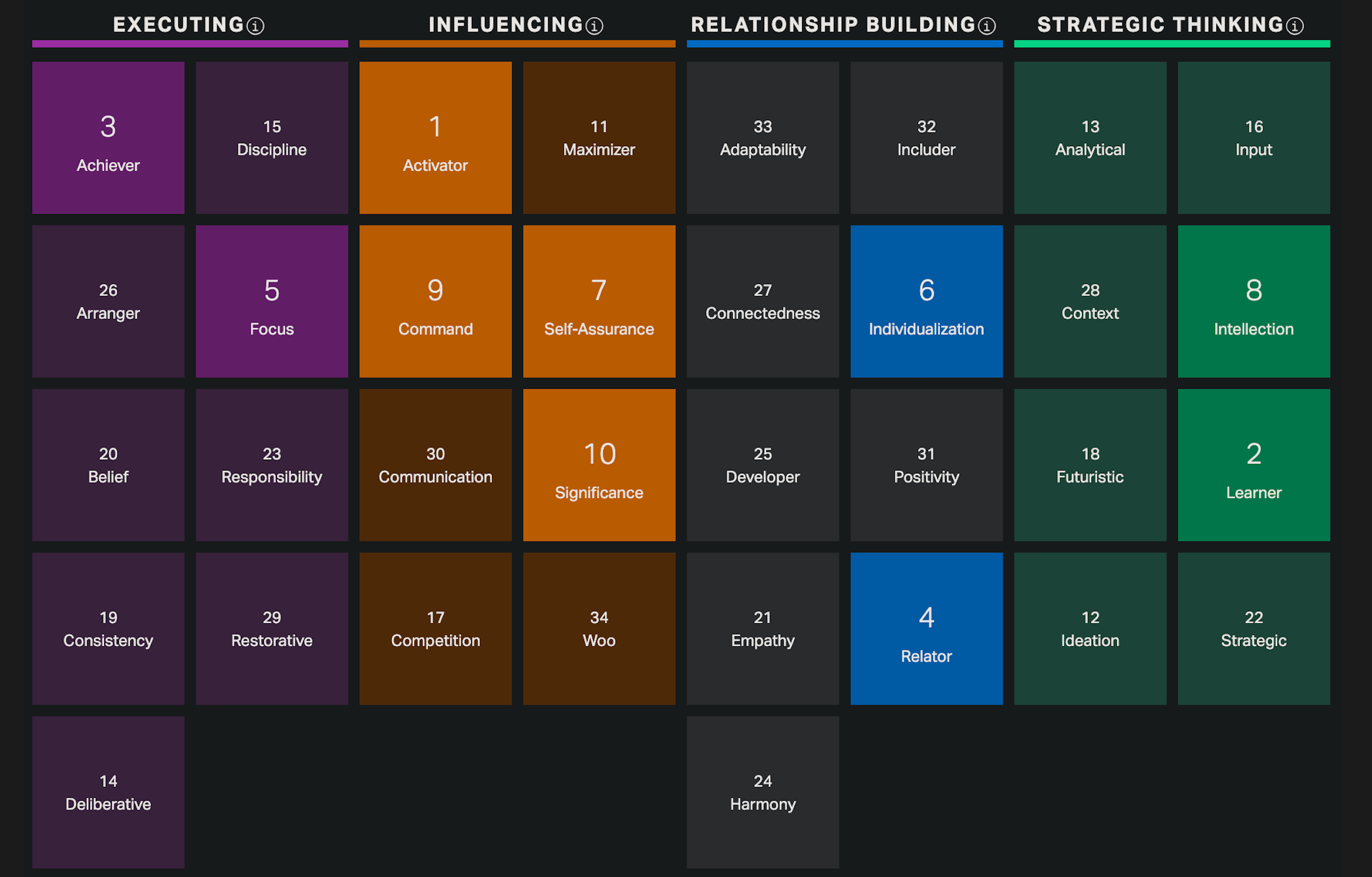
Since the first impression after seeing the results is often a belief that “we knew all this already,” it’s worth digging into the resources Gallup’s Institute shares about each talent. Based on this knowledge, we can shape our own process of developing each theme into an actual strength. In my case, it was:
- Reading all the official materials
- Writing down the most important suggestions about my top 5
- Writing down the observations, namely how each suggestion is or is not visible to me in my daily life
- Writing down the conclusions, namely how the observations of my behavior connect with Gallup’s suggestions
- Writing down an action plan for activities I added to my daily routines to develop my talents
- Reflecting on which activities stayed with me for years, which were modified, and which were removed after seeing their actual effect on me
Principles You
This is another personality assessment, designed by Ray Dalio and Adam Grant.
My results: The Quiet Leader
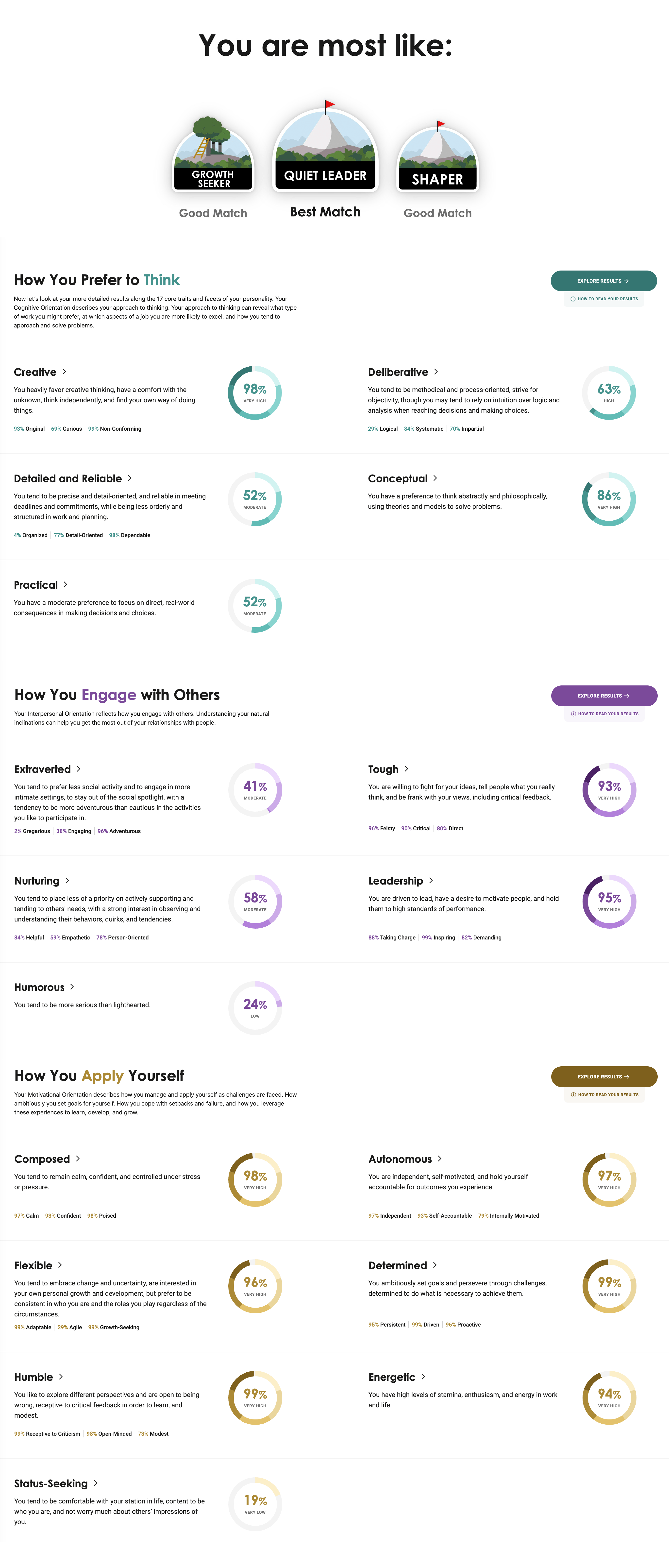
Principles You is extremely insightful because it gives us a broad perspective on various aspects of our personality, presenting them in different contexts. The results helped me adjust my process, because they highlighted things I’m already good at and areas I struggle with the most.
The Big Five
This assessment is fairly general, but it is widely considered one of the best documented, with solid research behind it.
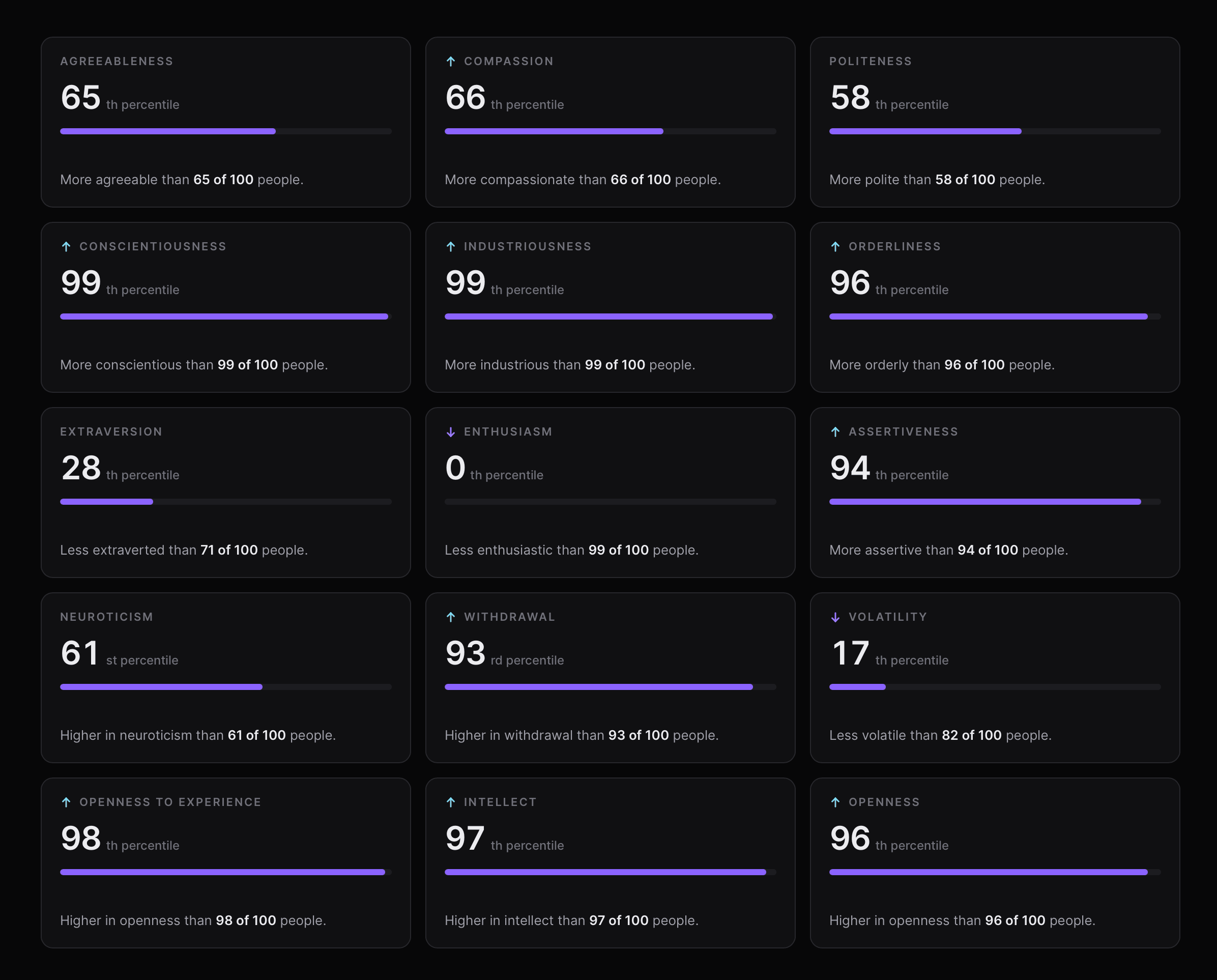
this is just a demo